A balcony inspection turns up soft decking, or a board opens an engineering report that uses the word “failure.” Two questions land almost at once: what will it cost to rebuild, and who is responsible for paying, the association or the individual homeowner? This guide walks through the cost drivers, the responsibility framework, the timeline, and how a failed balcony actually moves from inspection to a finished reconstruction in Texas condo and multifamily communities.
What Counts as Balcony “Structural Failure” (Not Just Cosmetic Damage)
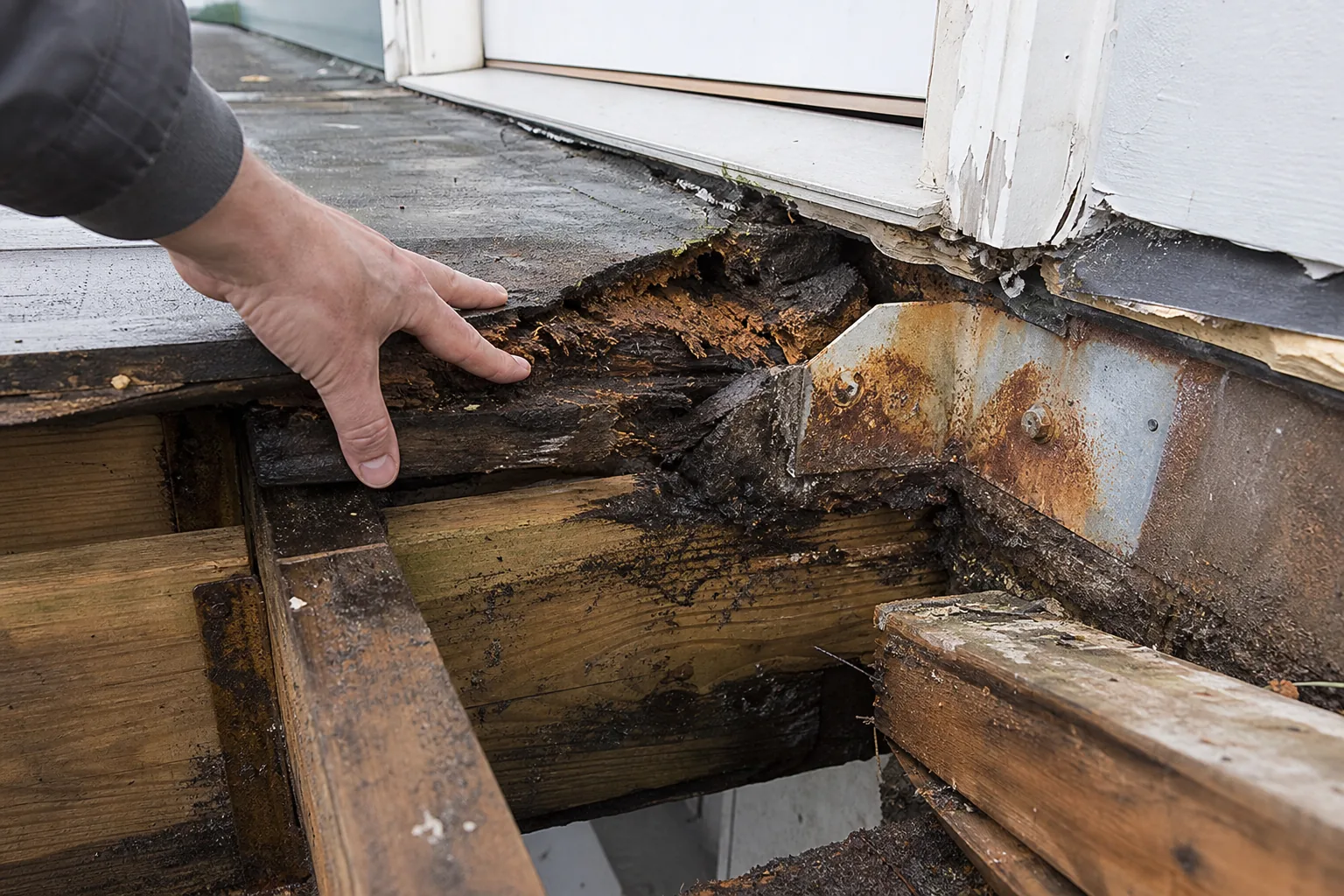
There’s a real difference between wear and failure. Faded coating, peeling railing paint, and surface cracking are cosmetic, they look bad, but the structure is intact. Structural failure means the load path itself is compromised: rotted joists and framing, a corroded or pulled ledger connection where the balcony ties into the building, or a failed waterproofing membrane that has let water migrate into the wall assembly.
Most balconies fail for one reason: chronic water intrusion at the junction where the deck meets the wall. Water finds a gap in the flashing or membrane, sits in the framing, and slowly decays the wood until it can no longer carry load. Research from the USDA Forest Service on durable balcony and deck construction underscores how much long-term performance depends on detailing the deck-to-wall connection to shed water rather than trap it, the exact spot where most failures begin.
Warning signs a board should never wave off: decking that feels soft or spongy underfoot, any visible sag, rust staining bleeding through the surface, movement or give at the railings, and, often the first clue anyone reports, a water stain on the ceiling of the unit directly below. By the time damage is visible inside, the decay is usually well advanced.
By the time damage is visible inside, the decay is usually well advanced.
What Balcony Reconstruction Actually Costs
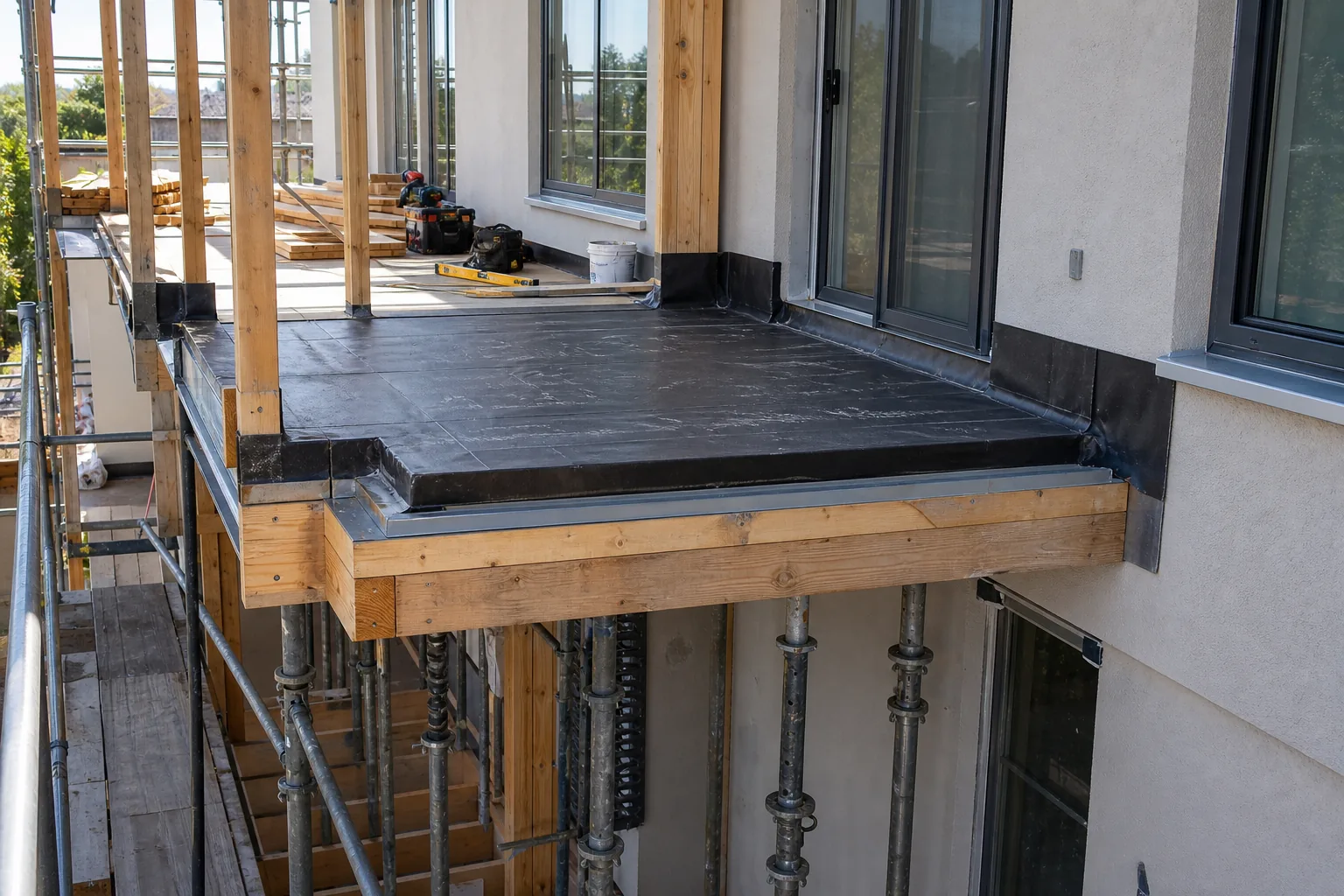
Honest answer first: cost varies enormously, because a repair and a rebuild are not the same project. Replacing a waterproofing membrane and a few boards is worlds apart from tearing out and reframing a structural balcony to current code. Rather than quote a number that won’t fit your building, it’s more useful to understand what actually moves the price.
The Factors That Drive Balcony Reconstruction Cost
- Extent of structural damage. Surface-and-membrane work sits at the low end; full framing and ledger replacement sits at the high end. What the engineer finds once demolition opens the assembly often expands the scope.
- Waterproofing and envelope re-detailing. Rebuilding the membrane, flashing, and drainage so water is permanently kept out of the structure is central to the job, and to its cost. A study in Building and Environment on comprehensive balcony renovation and optimization design reinforces that waterproofing and performance detailing, not just structure, drive both the scope and the value of a renovation.
- Access and staging. Upper-floor balconies, occupied units, and the shoring needed to work safely all add labor and time.
- Materials and code-compliant upgrades. Reconstruction often has to meet current structural and connection standards, not the ones in place when the building went up.
- Number of affected balconies. When the same detailing failed on one balcony, it usually failed on many. Addressing them as a community-wide program creates economies of scale a single unit can’t capture. Experienced multi-family condominium reconstruction contractors can phase that kind of program to control both cost and disruption.
Repair vs. Full Rebuild, Why the Gap Is So Wide
When people ask what it costs to repair, or remodel, a balcony, the honest framing is a spectrum, not a sticker. A cosmetic refresh or membrane repair is a modest, predictable job. A structural rebuild that reframes the deck, re-establishes the connection to the building, and re-waterproofs the envelope is a different category of work and budget. The trap is treating a structural problem as a cosmetic one: repainting over rot doesn’t stop the decay, and the bill comes back larger.
Who Pays, HOA or Homeowner?
This is where boards and owners most often collide, and there’s no universal answer. Responsibility is set by your community’s own governing documents, the CC&Rs. Balconies are notorious for landing in a gray zone, because they’re attached to one unit but built into shared structure.
Common Area vs. Exclusive-Use, Where Balconies Usually Land
As a general pattern, the structural and weatherproofing elements, the framing, the connection to the building, the envelope, tend to be association responsibility, while the surface and day-to-day use of the balcony often sit with the homeowner. Many documents classify a balcony as “exclusive-use common area”: common structure that only one unit gets to use. But this is a starting point, not a rule, your documents control.
The issue is that the HOA is responsible for ensuring the structural integrity of the balconies. The homeowner is responsible for the relatively …
Why Responsibility Causes So Much Confusion
The confusion is built into the structure. A balcony is one homeowner’s outdoor space and also part of the building’s shell, so both parties can reasonably believe it’s the other’s problem. The same tangle shows up with a leak in a condo ceiling: the water surfaces in one owner’s unit, but the source may be shared structure or an adjacent unit entirely. That’s why “who’s responsible” rarely has a clean answer until someone traces the damage to its true origin.
Start With Your Governing Documents and Reserve Study
Before anyone assumes who pays, do three things: read the CC&Rs to see how balconies are classified, check the reserve study to see whether these components were funded, and get a forensic or engineering assessment that defines what actually failed and why. The documented condition, not a guess, is what should drive the funding conversation.
How Long Does Balcony Reconstruction Take?
Timeline follows the same logic as cost, it depends on scope. A single-balcony rebuild moves through a predictable sequence: inspection and engineering assessment, scope and design, permitting, shoring and demolition, framing and waterproofing, finishes, and final sign-off. Each step has to close before the next opens.
Occupied multifamily work takes longer, and for good reasons: residents need access to and around their units, work often has to be phased across many balconies so the building stays livable, and waterproofing steps are weather-dependent. A community-wide program is measured very differently from one balcony, plan for a schedule that reflects the full count, not a single deck.
Water Damage Beyond the Balcony, Roofs, Ceilings, and the Unit Below
Balcony failures rarely travel alone. The same water-intrusion mechanism that rots a deck also drives condo roof leaks, flat-roof problems, and the ceiling stains that show up two floors down. Water enters the building envelope at a weak point, a balcony junction, a roof penetration, a failed flashing, then follows framing and gravity until it surfaces somewhere unexpected. Durability research on deck-to-wall construction detailing points to these transition points as where envelopes most often fail. Owners chasing leaks that reappear after a repair can work through our source-tracing checklist before approving another round of deck work.
A homeowner reports a ceiling stain; the actual breach is a balcony or roof detail well away from where the drip appears.
That’s exactly why chasing the stain instead of the source wastes money. Repairing the visible drywall without tracing the leak back to its origin guarantees a repeat. The same discipline applies in stacked and attached housing, where townhome reconstruction and leak tracing often means following water across shared walls and structure before a single board gets replaced.
From Inspection to Rebuild, How Reconstruction Gets Scoped
A failed balcony becomes a controlled project through a defined path:
- Forensic or engineering assessment to identify what failed, how far it spread, and why.
- Documented scope that translates the findings into a clear, buildable plan.
- Budgeting and CapEx planning, so the board can fund the work against reserves or a special assessment with real numbers.
- Code-compliant reconstruction that rebuilds structure and envelope to current standards.
- Final sign-off confirming the work meets the documented scope.
This contractor-side process is where care, quality, knowledge, and experience show up in practice: coordinating cleanly with forensic engineers and property managers, documenting condition thoroughly, and executing the rebuild so it holds up rather than resurfaces in three years. Boards weighing a first move often start by learning how to choose a reconstruction contractor for an HOA in Texas before committing to a scope.