
When a reconstruction notice goes out at a Texas condominium, residents and property managers often ask whether anyone will have to move out. Many exterior projects can proceed while the building remains occupied, but that does not mean every unit will remain safe or accessible throughout the work. Whether a resident must temporarily leave depends on the work scope, safety conditions, utility interruptions, and applicable requirements. This guide explains what residents can ask and how HOA managers can plan and communicate the work.
I’m Brett Grobarz, Vice President of Sales at Shepperd Construction. I hold a Master’s Degree in Architecture and have spent more than 16 years across construction, development, and the building-envelope industry. Working on both the design and construction sides shapes how I approach this question: what the repair design intends, what the building will actually allow, and what that means for the people living inside it.
The Short Answer: It Depends on the Work and Safety Plan
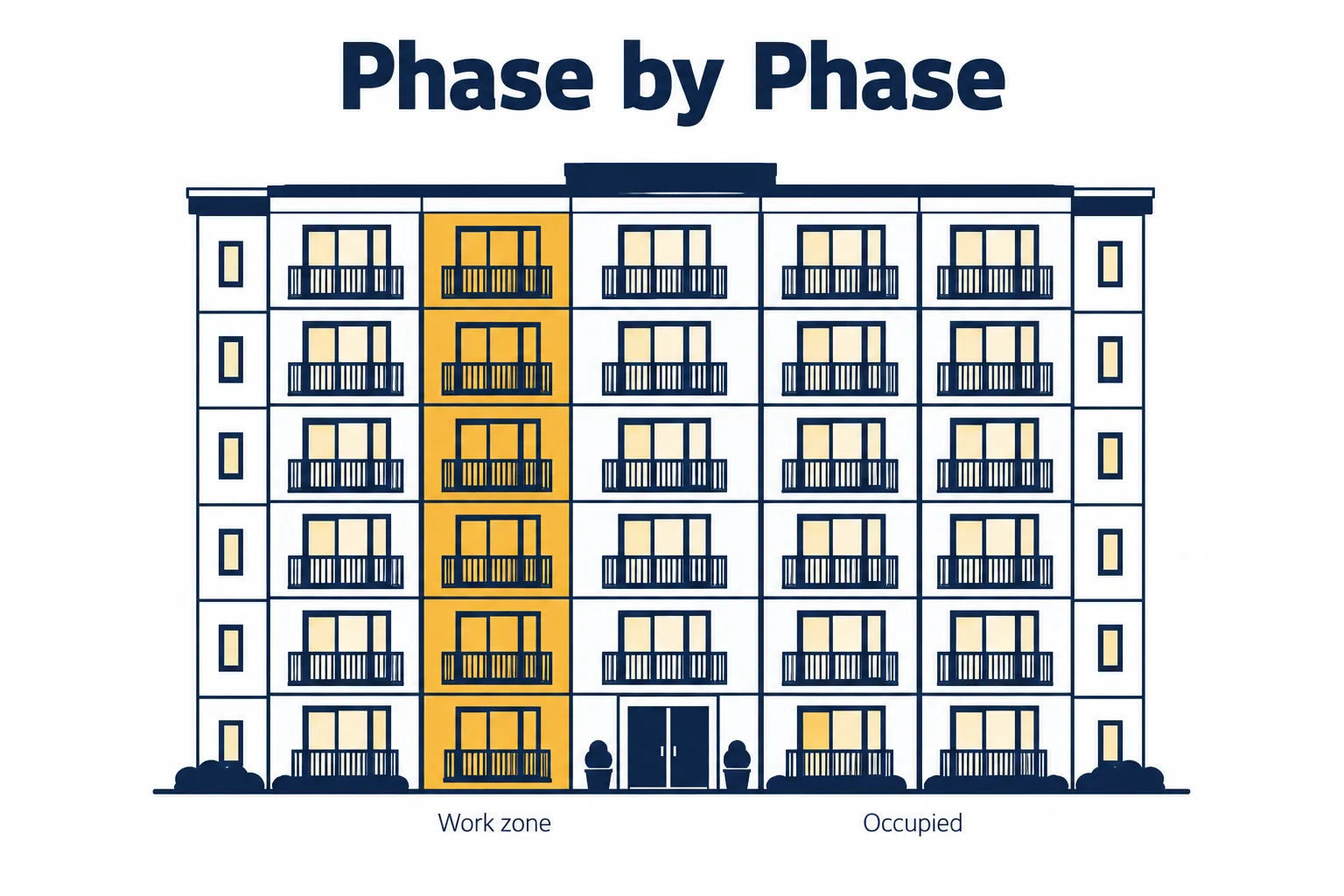
Many exterior reconstruction projects can proceed while the building remains occupied. That does not guarantee that every unit can remain occupied or accessible for every phase. More extensive structural work, hazardous-material work, serious life-safety conditions, an extended utility interruption, or an official order may require some units, or, in some cases, the building, to be vacated.
Temporary relocation may apply to:
- Specific units where interior assemblies must be opened, or conditions make occupancy unsafe.
- A specific phase while work, cleanup, utility restoration, or inspection is underway.
- Specific conditions, such as a life-safety issue, an extended utility interruption, or a hazard that cannot be controlled with residents present.
The association and its qualified design and construction professionals should communicate the project-specific plan. A contractor can help plan sequence, access, and resident coordination; the responsible professionals and authorities determine project requirements and safe re-entry.
What Actually Decides Whether a Unit Must Be Vacated
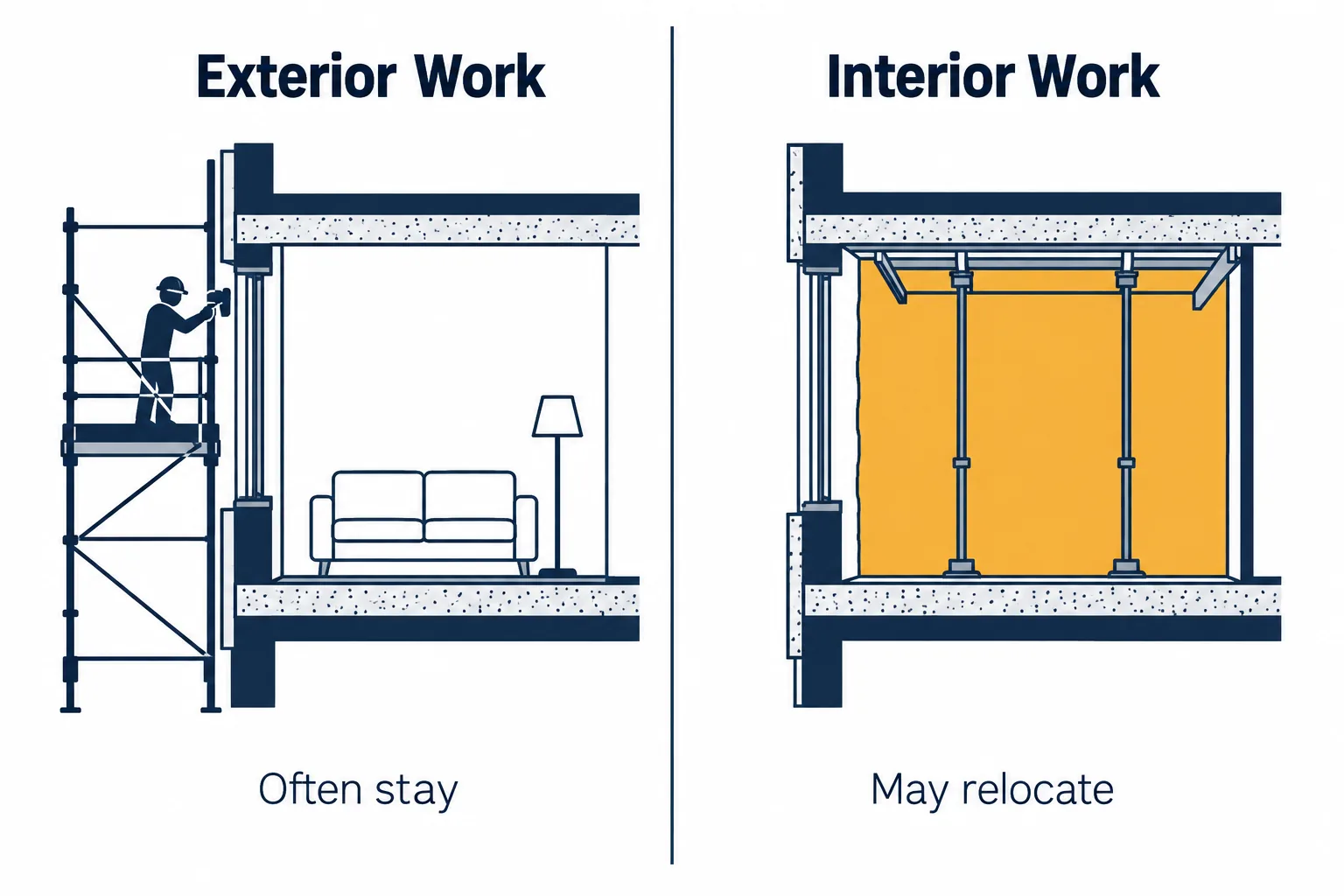
When a property manager asks whether residents will need to leave, these are the factors I walk through.
Scope of work. Exterior envelope, balcony, and facade repairs are a very different experience for residents than work that opens walls, floors, or ceilings inside a unit. The closer the work gets to living space, the more likely a short relocation becomes.
Life-safety conditions. Blocked egress, compromised structure, temporarily disabled fire protection, or hazardous materials can make a unit unsafe to occupy, even briefly.
Utility interruptions. A short water or power shutoff is an inconvenience. An extended loss of water, power, HVAC, or gas can make a unit temporarily uninhabitable, especially in a Texas summer.
Engineering direction. Forensic engineers and the design team define what is safe. The contractor’s job is to sequence the work around those limits so residents are affected as little as possible.
None of this is a legal or engineering conclusion about any particular building. The governing documents, the association, and qualified professionals make the final call on a specific unit.
Exterior and Building-Envelope Work: Typically Done With Residents in Place
Cladding, sealant, window, waterproofing, and roof repairs are commonly performed from scaffolding, swing stages, or lifts outside the unit. Some projects can keep residents in their units during this work, depending on the work plan and site conditions. Residents may still experience:
- Limited or no balcony access while their section of the facade is being worked on
- Protective coverings over windows
- Noise during working hours
- Scheduled entries so the team can check interior inspection points, such as around windows or along exterior walls
Roof leaks and envelope failures can affect multiple parts of a condo building. Early investigation helps the association understand the source and scope before repair work is planned.
Interior, Structural, and Water-Damage Remediation: When Relocation Becomes Likely
Relocation becomes more likely when the work moves inside. Opening interior assemblies, removing wet or damaged materials, or installing structural shoring can require a unit to be empty for a phase.
Hidden water damage deserves special mention. Once walls are opened, the damage is sometimes larger than anyone could see from the surface. That can change both the scope and the relocation timing for affected units, so a good plan builds in room for findings instead of promising a fixed date.
The work may be phased unit by unit or by building area, allowing other parts of the property to remain occupied when site conditions permit. The actual sequence depends on the investigation, repair design, access, and safety plan.
Texas Condo Access Rights Depend on the Declaration and Applicable Law
The declaration and bylaws are central to a condo association’s repair and access authority. Texas Property Code Chapter 82 may also apply. For condominiums governed by Chapter 82, Section 82.107 addresses reasonably necessary access through a unit and certain association entries after notice. Applicability and notice requirements can depend on the condominium and its declaration date, so have Texas condo counsel review the documents before advising residents.
If you’re a resident, ask the association or property manager for:
- The written construction schedule
- The scope of work that affects your unit specifically
- The notice process for entries, shutoffs, and any relocation
- A single point of contact for questions
This is educational information, not legal advice. For questions about your specific rights or obligations, talk with a Texas attorney who handles condominium matters.
If a Tenant Rents the Condo, Who Coordinates the Move?
The association generally communicates with the unit owner about common-element work. If the owner leases the unit, the tenant should also contact the landlord about the lease, access notices, and any proposed temporary move.
Texas Property Code Chapter 92 addresses landlord repair duties and certain casualty-loss situations, but it does not give one universal answer for every temporary relocation during planned association repairs. The lease, the unit’s condition, the circumstances of the work, and any official orders may matter. Tenants and owners should seek advice about their specific situation.
For owners who lease their units, share the association’s schedule with tenants early and explain which work, access, or utility interruptions may affect the unit.
Who May Pay for Temporary Housing?
This matters most to residents who are asked to relocate, and the answer depends on the documents and policies involved.
The declaration and bylaws may allocate maintenance and repair responsibilities. The association’s master policy and an owner’s individual condo policy determine insurance coverage under their terms. A tenant’s rights and responsibilities may also depend on the lease and applicable law. Ask the association and insurer to confirm what applies; do not assume a temporary move will be reimbursed.
Some condo policies include additional living expense or loss-of-use coverage when a covered event makes a unit uninhabitable. Coverage depends on the policy, covered cause, limits, and insurer’s decision. The Texas Department of Insurance explains additional living expense coverage.
Keep repair responsibility and insurance coverage distinct: governing documents may assign who maintains or repairs a building component, while insurance policies determine whether a particular loss or expense is covered.
Typical Condo Reconstruction Timeline and Phases
People often ask about the typical timeline for renovating a condo. For association-led reconstruction, the more useful answer is the sequence of phases:
- Investigation and testing. Engineers and the contractor gather data on what is failing and why.
- Design and scope. The engineering team defines the repair approach.
- Preconstruction and resident communication. Budgets, sequencing, access methods, and resident notices are worked out.
- Mobilization. Scaffolding, lifts, staging, and site protection go up.
- Phased construction. Work moves elevation by elevation, stack by stack, or building by building.
- Closeout. Final inspections, punch lists, and demobilization.
Total duration varies widely with building size, scope, access method, weather, and what’s discovered once work opens up. Phasing can limit how long any single unit is affected, but the schedule should be confirmed for the specific property and work area.
If I Have to Move Out, How Long Could It Last?
There is no reliable one-size-fits-all duration. Time away may depend on the work inside the unit, required drying or cleanup, utility restoration, inspections, and the criteria for safe re-entry. Ask management for a unit-specific notice that identifies the expected vacate date, planned work, who will confirm the unit is ready, and how schedule changes will be communicated.
Living in Place During Reconstruction: Dust, Noise, Access, and Safety
Residents may be able to remain in parts of an occupied condo during reconstruction, depending on the work plan and conditions. Ask the manager what areas are restricted, what controls will be used, and what to expect each day.
Dust control. Cutting and grinding concrete and masonry can create dust. The project safety plan should address containment, separation of work areas, cleanup, and resident access. Ask management or the contractor whether the unit’s HVAC filter or ductwork needs attention after nearby work; requirements depend on the building system and project conditions.
Regulated materials in older buildings. Some older Texas condo buildings may contain lead-based paint. For covered renovation work that disturbs lead-based paint in pre-1978 housing or child-occupied facilities, EPA’s Renovation, Repair and Painting Rule can require a certified firm and lead-safe work practices. Qualified professionals should determine whether the rule applies to the building and scope.
Resident checklist:
- Move valuables and fragile items away from exterior walls and windows
- Plan for pets during noisy hours and scheduled entries
- Confirm parking, entry, and amenity changes
- Keep the project team’s contact information handy
- Ask for shutoff dates so you can plan around them
For Property Managers: Use a Unit-by-Unit Occupancy Plan
For managers, the relocation question is really a planning question. A written plan helps residents understand what applies to their specific unit and gives the project team a consistent way to share updates.
Track these details for each affected unit or area:
| Planning item | What to record |
|---|---|
| Unit or area | The location affected by the work |
| Work and access | Planned work, entry needs, and restricted areas |
| Occupancy status | Whether residents may remain, subject to project conditions |
| Dates | Expected vacate, work, and re-entry dates, if relocation applies |
| Utilities and notice | Planned interruptions and dates residents were notified |
| Contact and updates | Named contact and how schedule changes will be shared |
Before work begins, confirm the resident communication plan, access windows, potential relocation phases, and how changes will be approved and communicated.
Do not promise a move-out or re-entry date until the responsible project professionals can support it.
The budget side is covered in more detail in our guide to the cost of full building reconstruction for HOA properties, including why working around residents changes how an occupied-building project is run and priced.
How Shepperd Construction Approaches Occupied Condo Reconstruction in Texas
Shepperd Construction is a Texas general contractor focused on reconstruction: building-envelope, waterproofing, structural, and aging-infrastructure repair for condominium communities and other buildings. For more than eleven years, that work has meant partnering closely with forensic engineers, property managers, and building owners. Our role includes preconstruction planning, investigative testing support, coordination, and reconstruction; unit occupancy depends on the project scope, site conditions, and applicable safety requirements.
In practice, that looks like:
- Reviewing the engineering scope and considering resident access as work is sequenced
- Using preconstruction to identify phases that may affect occupancy before notices are issued
- Planning access methods to limit unnecessary time inside units
- Keeping communication clear and consistent with managers and boards throughout
Having worked on both the design and construction sides, I’ve found the smoothest projects are the ones where constructability and the resident experience sit at the same table as the repair design. Learn more about our reconstruction services for Texas multifamily condominium communities.
Frequently Asked Questions
Related readingReconstruction Contractors Texas Operating in 4 Major CitiesRead the guide →Frequently asked questions
Will I have to move out during exterior condo repairs?
Can the HOA require a unit to be vacated for repairs?
How long might my unit be unavailable during reconstruction?
Who pays for temporary housing if my condo is uninhabitable?
Can a landlord require a tenant to leave during condo repairs in Texas?
Talk With Shepperd Construction About Your Reconstruction Project
If you’re a property manager or building owner facing building-envelope failures, water intrusion, or defect repairs, the best time to plan for residents is before the first notice goes out. Our team can help with investigative testing, cost-of-repair evaluations, and reconstruction planning that accounts for resident access and project phasing. Start a conversation with Shepperd Construction about your building and your residents.