Water is running through a condo ceiling, the units below are soaked, and someone has to decide who makes the building whole again. “Restoration” and “reconstruction” get used as if they mean the same thing. They don’t. They’re two phases of recovery handled by two different specialists, and knowing which one you need saves time, money, and a second failure down the road.
What a Restoration Contractor Does (the Emergency Phase)
A restoration contractor is the crew that shows up while the damage is still happening. Their job is to stabilize and mitigate: extract standing water, set commercial air movers and dehumidifiers, remove ruined drywall and carpet, remediate mold, board up openings, and protect contents. The goal is to stop the loss from getting worse and move the property back toward its pre-loss condition.
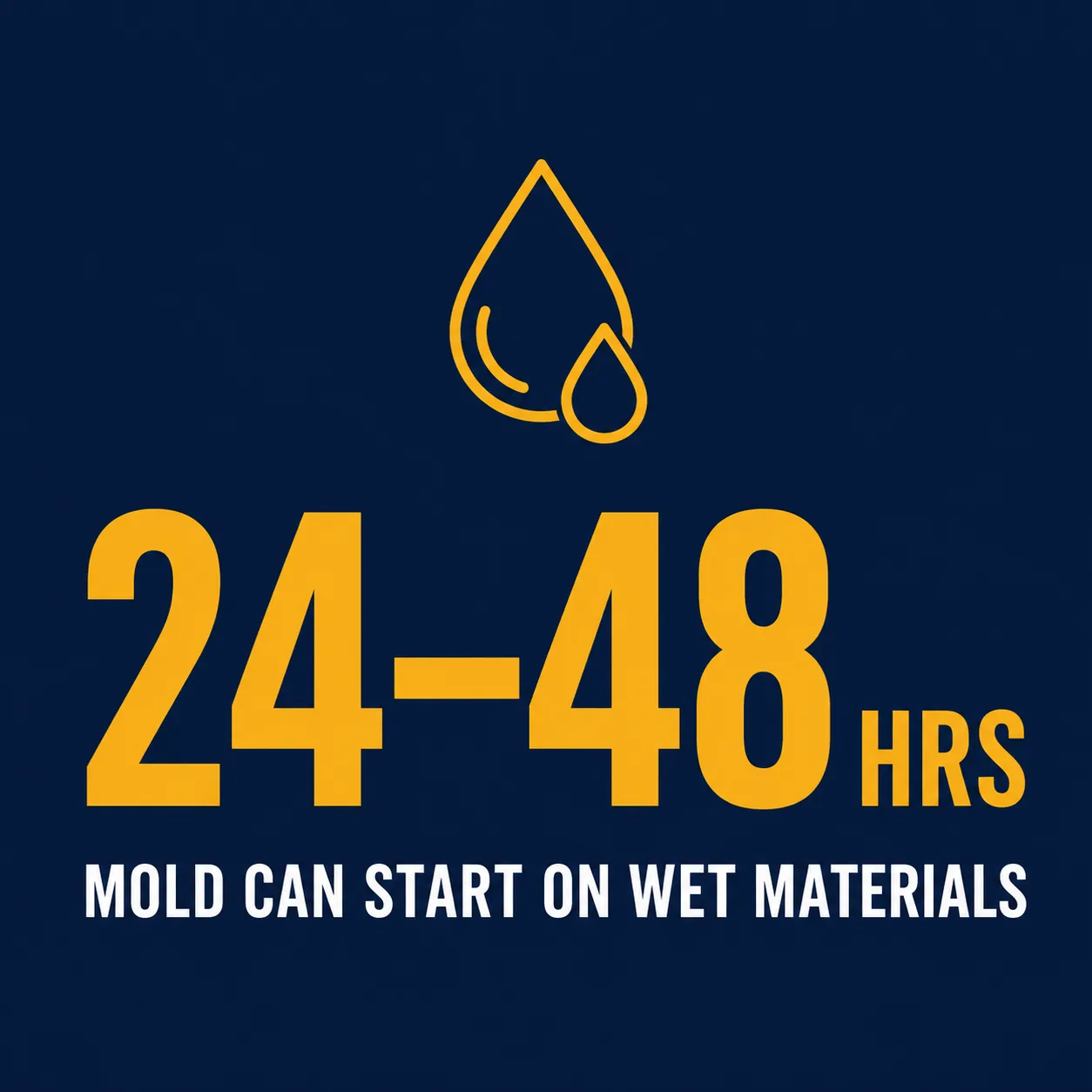
Speed matters here. According to the EPA’s guidance on mold remediation in commercial buildings, mold can begin growing on wet materials within 24 to 48 hours, which is why drying starts immediately and not after the paperwork clears. Restoration companies carry the specialized equipment for that window, are often first on site, and frequently coordinate directly with the insurance carrier during the emergency.
What a restoration contractor generally does not do is rebuild the structure. Once everything is dry, stable, and safe, the property is ready for the next specialist.
They are separate contracts for mitigation and reconstruction. The reconstruction contract should only go into effect if the estimate is agreed …
What a Reconstruction Contractor Does (the Permanent Rebuild)
Reconstruction is licensed general-contractor work: putting the building back together after mitigation. That means framing, roofing and waterproofing systems, structural repair, and restoring the assembly to current code so the fix actually lasts. On a multifamily or commercial property, this is where the building envelope, the roof, walls, windows, and waterproofing that keep water out, gets rebuilt correctly rather than patched.
This is our lane. Shepperd Construction is a Texas general contractor focused specifically on reconstruction, building envelope, structural, and waterproofing repair on multifamily and commercial buildings. Over an 11-plus-year track record, we’ve built our reputation on doing the permanent repair with the care and quality that keeps a building dry for the long haul. That focus extends from large apartment communities down to reconstruction contractors for single-family homes.
Getting the envelope right is not optional. Building-performance research from the National Institute of Standards and Technology points to moisture intrusion as one of the most common and costly failure points in a structure, which is why reconstruction is a licensed, engineered trade rather than a cosmetic one.
The Core Difference at a Glance
| Restoration Contractor | Reconstruction Contractor | |
|---|---|---|
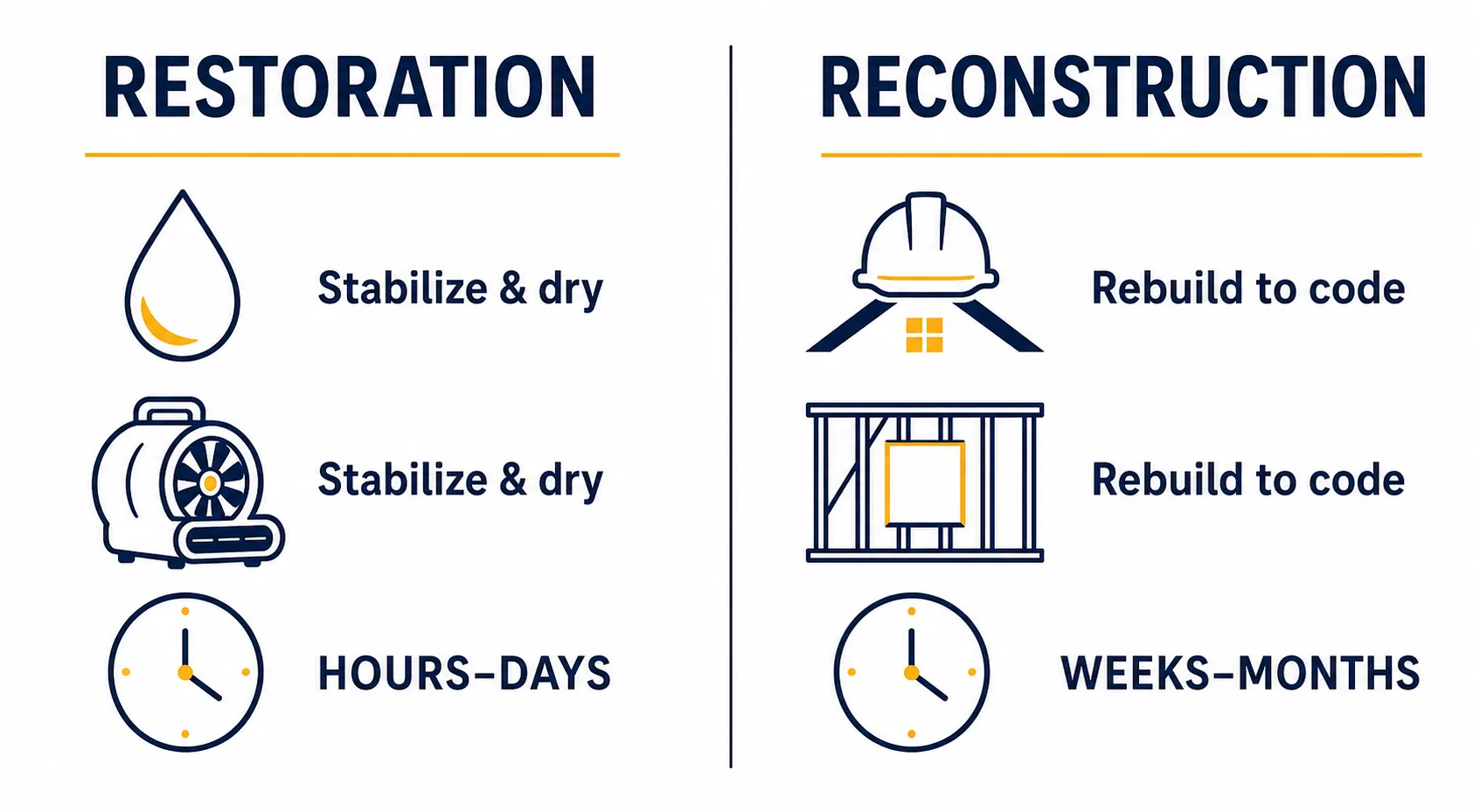
| Trigger | Active, ongoing damage | Property is dry and stable |
| Primary goal | Stabilize and mitigate fast | Rebuild permanently and to code |
| Timeline | Hours to days | Weeks to months |
| Core capability | Drying/remediation equipment | GC licensing, structural & envelope expertise |
| Insurer role | Often coordinates emergency claim | Executes the approved scope of repair |
| End state | Safe, dry, stripped to sound materials | Fully rebuilt structure |
The fastest decision rule: Is the property still actively being damaged? Call restoration. Is it dry and now needs to be rebuilt? Call reconstruction.
How the Two Work Together: From Emergency to Rebuild
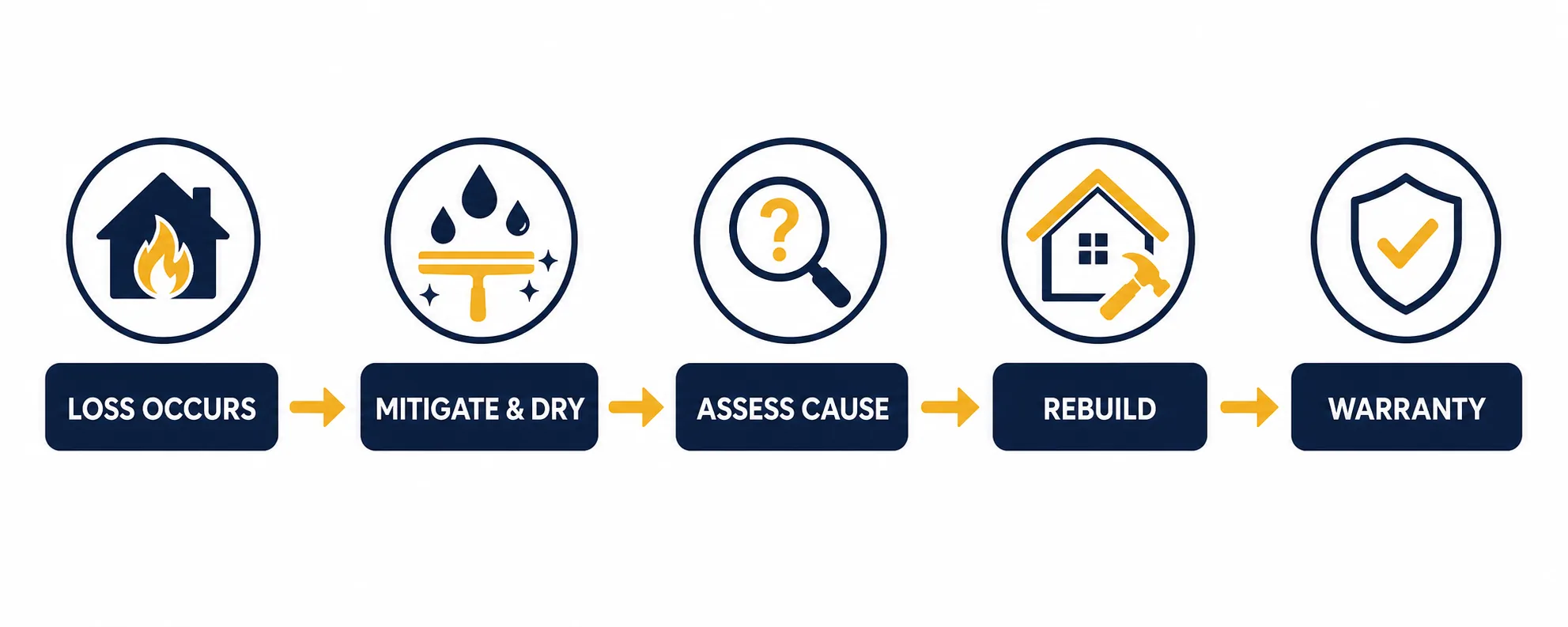
Most real projects run in sequence. A loss occurs. Restoration mitigates and dries. The cause and full scope get assessed. Reconstruction rebuilds. Warranty coverage follows.
On larger or more complex jobs, that assessment step carries real weight. Forensic engineers evaluate why the failure happened before permanent repair begins, and the reconstruction contractor builds to that engineered scope. Rebuilding to withstand future water intrusion, not just replacing what washed out, is exactly the approach FEMA’s building science resources recommend for durable recovery. For owners facing this scale of work, our guide on how to choose a reconstruction contractor for large projects in Texas walks through what to weigh before signing.
Condo & Multifamily Roof Leaks: Who’s Responsible and Who to Call
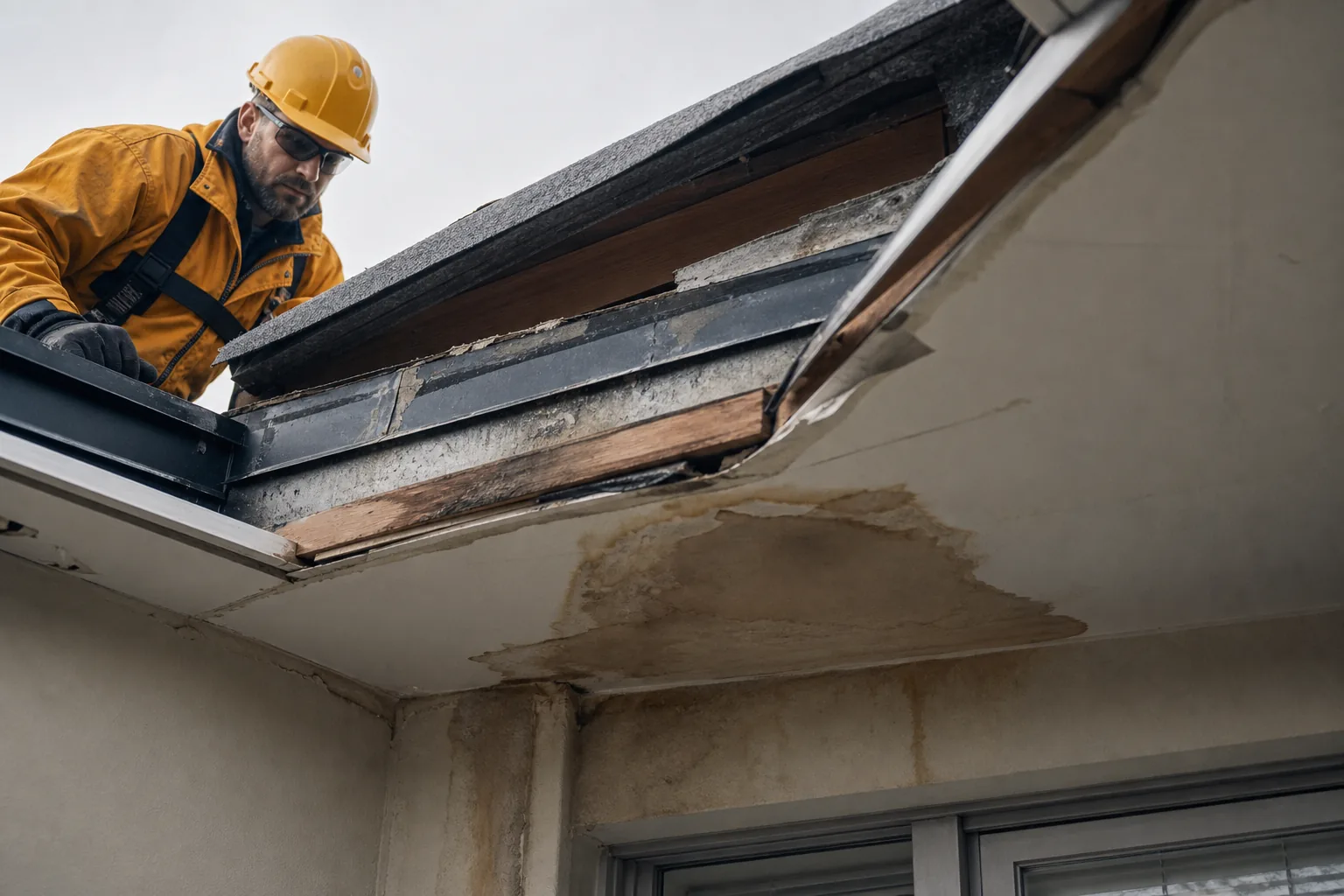
This is where the two-trade question gets personal for condo owners and HOA boards.
Does the HOA cover roof leaks?
Generally, the roof and other common elements fall to the HOA or association under the community’s governing documents, while interior finishes inside a unit may be treated differently. That split varies from one association to the next, so the real answer lives in your CC&Rs and the master insurance policy, read them before assuming who pays. Texas trade and licensing information is available through the Texas Department of Licensing and Regulation if you’re vetting who can legally perform the work.
A reroof or roof repair flooded the units below, now what?
When a roof replacement or repair sends water into the units underneath, drying alone doesn’t fix it. You have both an envelope problem and interior damage. That calls for reconstruction of the waterproofing assembly plus repair of the affected interiors, coordinated so the leak source is corrected, not just the stains it left behind.
Choosing the Right Partner for Major or Multifamily Damage
For a serious loss on a multifamily or commercial building, the contractor you pick should have:
- Proper general contractor licensing for the scope of work
- Building-envelope and waterproofing expertise, not just general remodeling
- Experience coordinating with engineers and property managers through the full repair
- A clear warranty on both workmanship and materials
Warranty terms matter more than most owners realize, the coverage details we outline for our reconstruction contractors in Austin, TX show what a real reconstruction warranty should include. This is the core of what we do across Texas: building-envelope reconstruction, construction defect repair, and capex work on aging apartment and condo infrastructure, the kind of major water-loss and multifamily rebuilds that demand a dedicated reconstruction GC.