
By Brett Grobarz, Vice President of Sales, Shepperd Construction
A growing gap, bulging, or leaning in brick veneer can indicate a problem with the veneer’s support or another part of the wall system. The visible symptom alone does not identify the cause.
This guide is for Texas property managers and building owners responsible for multifamily exteriors.
Quick answer: Brick veneer can pull away from an apartment building because of failed or poorly installed ties, movement at its supports, water-related deterioration, or other wall-system problems. Since loose masonry can fall, keep people away from the affected area and arrange an assessment by a qualified engineer before repair work begins.
Warning Signs of Separating Brick Veneer
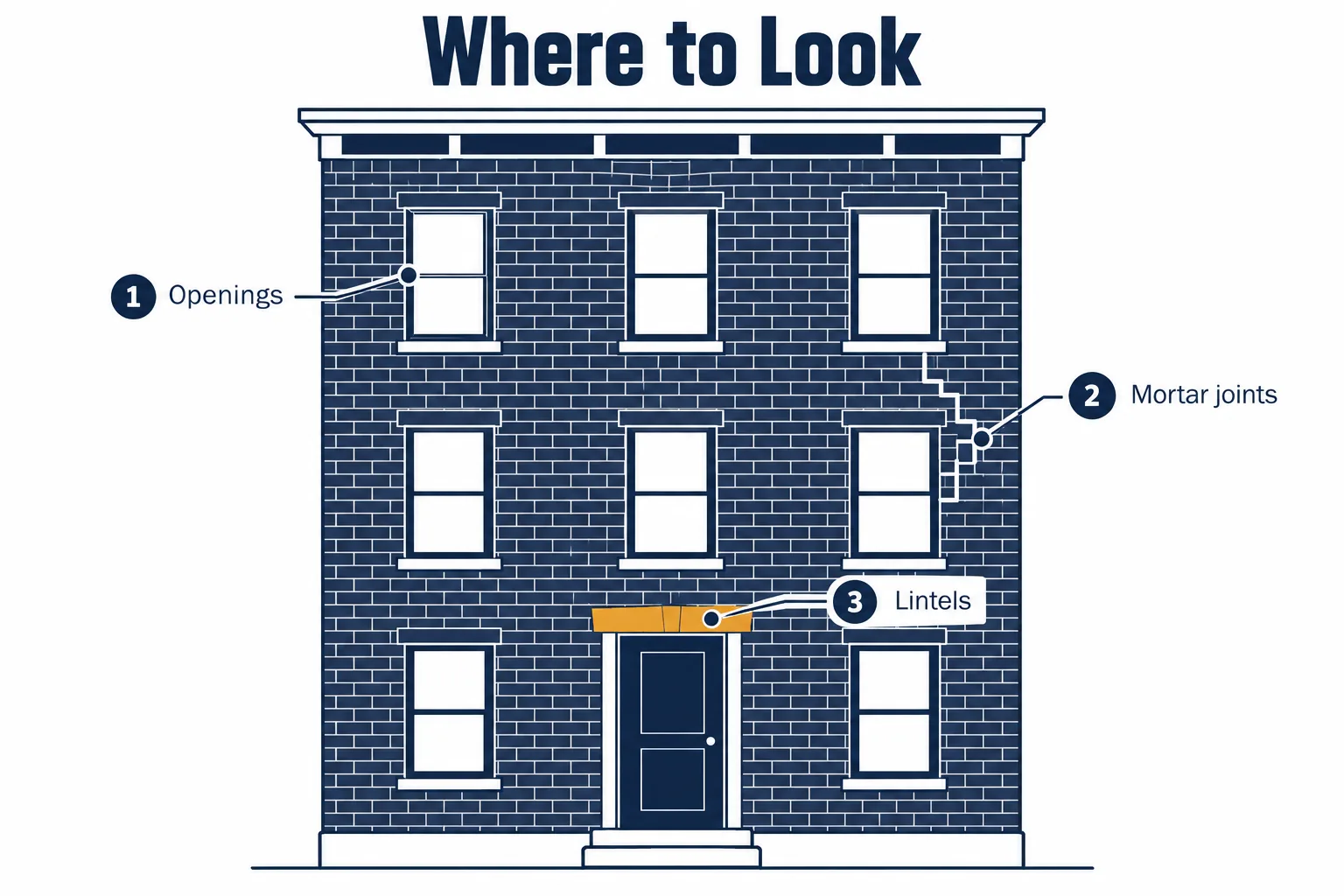
- Gaps opening at windows, doors, and soffits
- Bulging or leaning sections of brick
- Stair-step cracks through mortar joints
- Sagging or displaced lintels over openings
- Open or crumbling mortar joints
These are warning signs, not a diagnosis. Different problems can produce similar cracking or displacement, so an engineer should assess the wall and its supports.
First Confirm That the Wall Is Brick Veneer
Brick veneer is a masonry exterior layer attached to a structural backup. A building may use a different masonry wall assembly, so the repair approach depends on the actual construction. An engineer should confirm the wall type before anyone assumes that veneer ties are the cause. A review of brick masonry veneer walls explains how veneer and its supporting wall work together.
How a Brick Veneer Wall System Is Supposed to Work
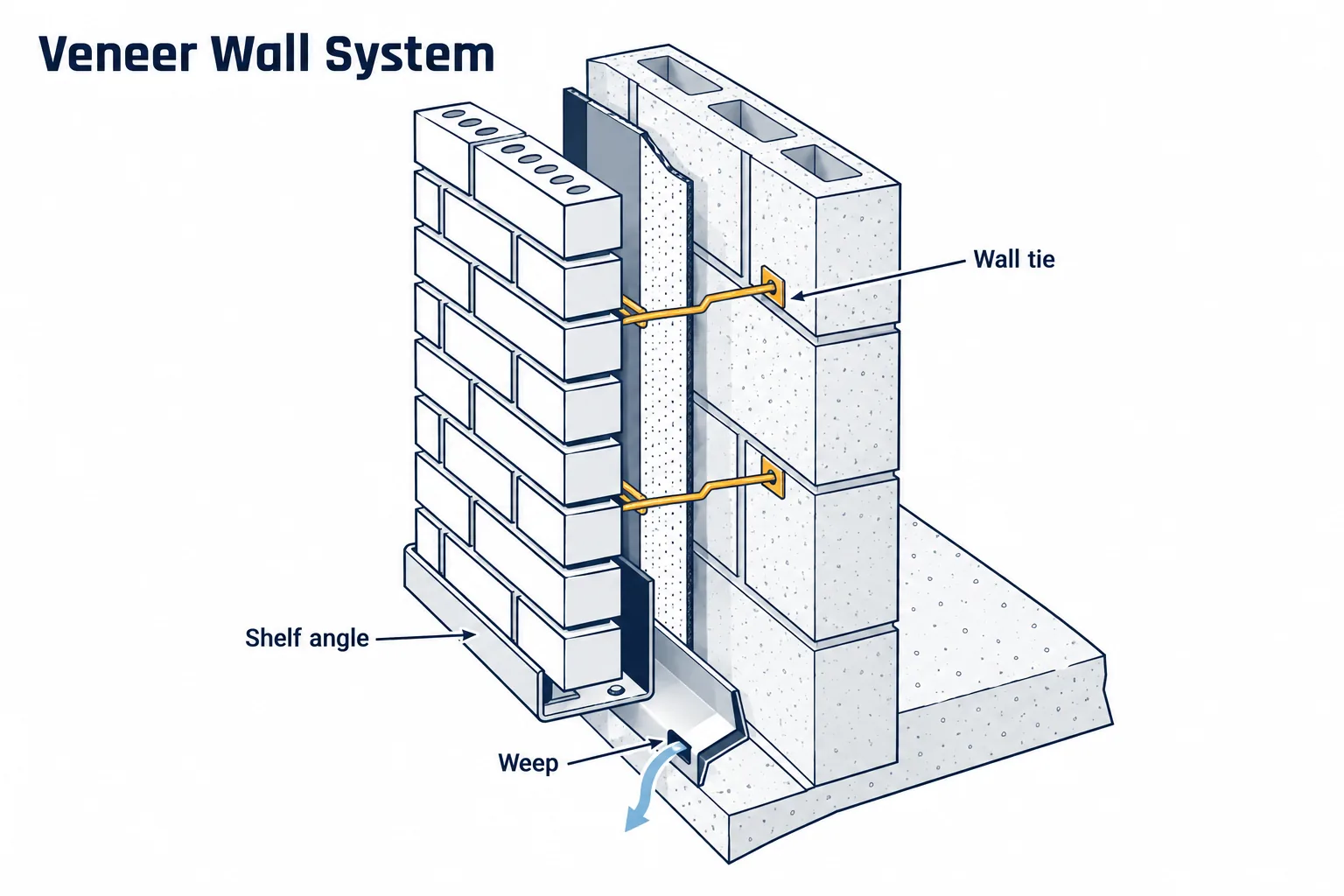
A veneer wall is a system, not a stack of brick. It includes the brick, an air cavity, a weather-resistive barrier, flashing, weep holes, wall ties, shelf angles or lintels, and movement joints.
The ties connect the veneer to its structural backup and help resist lateral loads such as wind while allowing for movement designed into the wall assembly. Brick and mortar can admit some water. In a properly detailed wall, the drainage space, flashing, and weeps help direct that water back out. See the Brick Industry Association’s Technical Note on brick veneer and concrete masonry walls for additional system details.
From a design-and-build perspective, the brick is only one part of the assembly. Performance also depends on the hidden connections, supports, and drainage details behind it.
Why Brick Veneer Separates From the Wall
If you are asking why your brick is pulling away, or why a gap has opened between the brick and the wall, the cause usually falls into one or more of these categories.
Corroded, Missing, or Poorly Installed Wall Ties
Ties exposed to persistent moisture can corrode and lose capacity. Ties may also be missing, poorly embedded, spaced incorrectly, or attached to a backup that does not provide the connection required by the wall design. If enough connections fail, the veneer may bow or move outward.
Foundation Settlement and Soil Movement
Some Texas sites have soils that shrink and swell as moisture changes. Differential movement in a foundation or wall support can contribute to cracking or gaps in the veneer. A crack pattern alone cannot confirm settlement; an engineer needs to assess the building and veneer supports. Shepperd’s apartment foundation damage guide explains why foundation movement in multifamily buildings can affect multiple areas.
Missing or Blocked Movement Joints
Brick veneer expands and contracts with changes in temperature and moisture. Missing or blocked movement joints can contribute to cracking, bowing, or stress at veneer supports. The effect depends on the wall assembly and its support details. The IIBEC guide to anchored brick veneer failures discusses common crack and displacement patterns.
Water Intrusion and Drainage Failures
Failed flashing, blocked weeps, or mortar droppings that bridge the cavity can interfere with drainage. Persistent moisture can contribute to tie corrosion and damage to susceptible materials behind the veneer. Roof, parapet, window, or wall-joint leaks may also feed water into the assembly, so the source should be assessed as part of the investigation.
Shelf Angles and Lintels on Multi-Story Buildings
Multi-story buildings may use steel shelf angles to support brick at floor lines and lintels above openings. Corrosion, deflection, or movement at these supports can contribute to cracking or displacement near those locations. The exact support arrangement varies by building, so it should be confirmed during the assessment.
Why Separating Veneer Is a Safety Issue
Loose brick at height can fall onto walkways, parking areas, balconies, or entrances. Hidden damage may extend beyond what is visible from the ground and needs to be assessed.
Related readingFort Worth Reconstruction Contractors | 11+ Years | BondedRead the guide →If brick is actively moving or falling, keep people away from the affected area and notify building management promptly.
What to Do Right Away
- Residents: Report it to management in writing with photos. Do not pry, patch, or touch the brick.
- Managers: Restrict access below the affected area and relocate parking if needed.
- Document: Take dated photos from a safe location and record any visible changes over time. Do not approach an unstable wall to measure it.
- Notify: Inform ownership or the board. Notify the insurer or other advisors as appropriate to the property and situation.
- Assess: Ask a Texas-licensed professional engineer with relevant building-envelope or masonry experience to assess the condition and specify any repair.
How Brick Veneer Separation Is Investigated
Investigation may begin with a visual survey. For upper floors, the team may need lifts or swing stages to view the wall safely. If the engineer recommends exploratory openings, they can help reveal tie condition and spacing, the cavity, flashing, and framing. If water entry is suspected, the engineer may recommend controlled water testing to help evaluate the leak path.
The engineer sets the investigation scope. A qualified contractor can coordinate safe access and perform agreed openings or testing under that scope. Findings can then inform a cost-of-repair estimate. Shepperd describes its invasive testing and reconstruction services on its Services page.
How Separating Brick Veneer Is Repaired
The engineer’s design sets the method; the contractor executes it. Common approaches include:
- Engineer-designed retrofit ties or anchors to reconnect veneer when the existing brick and backup wall are suitable
- Movement joints and sealants added or restored where the design calls for them
- Flashing, weeps, or shelf angles repaired or replaced where needed
- Partial or full removal and rebuild when the veneer is badly displaced, or the backup is damaged
- Foundation or support repairs when movement is confirmed, sequenced according to the engineer’s repair plan
How Long Should Brick Veneer Last?
Brick units are durable. The weak points are ties, flashing, sealants, and joints, and their life depends on materials, installation, and maintenance. Periodic facade inspections and sealant upkeep belong in any long-term capital plan.
Choosing a Texas Contractor for Brick Veneer Reconstruction
Look for:
- Building envelope reconstruction experience on occupied multifamily properties
- A history of working with forensic engineers and following engineered repair documents
- Preconstruction services, clear resident communication, and safe access at height
Shepperd Construction is a Texas general contractor focused on reconstruction. The company reports more than 11 years of experience. Brett Grobarz brings more than 16 years of experience across construction, development, and building-envelope work, along with a Master’s Degree in Architecture. His background informs how the team connects design intent with field execution. Learn more about Shepperd’s apartment complex reconstruction work.
Talk With Shepperd Construction About Separating Brick
If your Texas apartment or condo property has bulging or separating brick, contact us to discuss testing, cost-of-repair estimates, or reconstruction planning with your engineer.